Wendy to Peter: a Letter, a Prose Poem

Wendy to Peter: a Letter, a Prose Poem

For a long time, I have been fascinated by the Peter Pan story, and in particular the Wendy character. A child-Penelope, she is the one who waits in the company of her thoughts and her duties. In my own thoughts and writing, I often return to the concept of Wendy sewing on Peter’s shadow time and time again. This piece of writing below is an imagined letter from Wendy, no longer a child, to Peter. A poem, a whisper, an unsent message, a shadow sewn onto a shadow.

PETER PAN. One of the classic illustrations by F. D. Bedford from the illustrated edition of J.M. Barrie’s most celebrated story about Peter & Wendy & Tinker Bell. http://www.amazon.com/dp/B00T5OXAG8

Peter, my childhood friend. Peter with wings made of light.

I used to watch your shadow in the winter as we walked down the street together. It grew in diameter as your clothing became heavier. But it was softer against the snow than it ever was on pavement. I would touch it gently with the edge of my hand whenever I bent down to tie the laces of my boots.

Its edges were blurred and slightly cold. But it was kind to me when I touched it. It whispered all of the things you would never say.

Pale grey against the banks of snow, your shadow would drag behind your feet like smoke trails behind a torch.

But I think I have moved in the same way: I have followed you across rocks and ridges. I have followed you through the bed of a river. I have followed you through the sky, but you rose faster and I looked down just a little too soon.

Now that we are grown, I have tried time and time again to feel your shadow as it moves against my legs. Once as you lay down beside me, I tried to keep pinned it between my thighs, so that something of you would stay even when you rose to leave, as you always do.

But your shadow would run from me, just as fast as you run. It knows your velocity intimately, an archivist of footfalls. It knows you like I never could.

I would watch your shadow steady its pace as you moved down the stairs leading from my  fourth-floor apartment. It would disappear under the doorway in the front hall. And then you were gone as well. I would press my hand against the banister and feel myself returning. My self. I used to be afraid to be alone with my too-real thoughts. For a long time, I was better with shadows, and other things whose edges don’t cut.

I think we grew up too fast, my love. After so many nights, you were afraid to look into my eyes. I think you saw something there that you didn’t want to see – the reflection of your body, the changes in your face, the lines that were slowly forming around your mouth.

And everything we had been through together. The memories. Your mother’s face as she fell asleep and the glass in her hand spilled across in her lap. The sounds through the walls. And all of the worlds we, small children, invented. Peter and Wendy: we were the bookends to our own story. In the night, we comforted ourselves with the whispers that we wove sweetly from mouth to mouth. They were the blanket we used to warm our cold legs when it was only you and me alone together in the house as the dog, Nana, barked rhythmically in the yard. No one ever remembered that she was afraid of the dark.

At some point, I knew you were gone from me. You did it yourself, in a long slow rip. You stopped waking at dawn. You stopped falling asleep with a book in your hand. You spoke to me in words that belonged to someone else.

I had learned how to mend you for a while, but at some point I was no longer sure if wanted to anymore, or if I should. I was torn: And so I tried sewing you to me, your body facing mine, your lips against my shoulder, or your spine against my left side. I held you close, but the threads would always come undone in the night. I would wake to the awareness that you had shifted away from me, your knees pressed to your chest, your lungs like wings that had never expanded. I would watch you rise and walk to the window, your hand on the damp lips of the glass.

I looked up to the sky once again as I felt you leaving. I had my sewing in my hand. It stays with me, like my own shadow. The needles are the fingers of fairies that we believed in once: they are cold and metal, sharp and unbending.

I look up and see the stars: they are just small holes in the sky, as if someone had starting to sew erratically and then pulled the thread out at the very end. You are there too, just above me: you are a dark blot beneath a cloud. I think I can see outline of your clothing. I think you are wearing the shadow I sewed to you. You have outgrown it. It is a child’s shadow, and you are taller than me now.

You couldn’t escape the changes that came. Neither could I. I see you falling, and, instinctively, I hold out the skirt of my dress like a hammock to catch you.

But then I let the fabric fall, and I walk away. I have learned to love the sea: the waves that come back and dance around my ankles. The calm return of the light across my hands. The ache of the storm and all the names it does not call in the night. The shadows of seagulls that weave through the skeletons of the birds that flew the very same arc in the sky months before. All of these things are my stark but graceful lullabies.

The Alligator Did It: A Story of Rebounds and Imaginary Friends

When I was a child, if ever I got angry, I would take all the clothes from my dresser and throw them all around my room. Upon being discovered by my parents in the middle of a room full of strewn-clothing chaos, I would proclaim triumphantly, “The Alligator did it.”

Yes, it was always the Alligator.

And in a way I believed this: I believed that the Alligator, my imaginary but oh-so-real ally, had taken it upon himself to rip apart any semblance of normality and re-mark the world, rightly, with frenzy. Frenzy is only right in a world that makes no sense, in a world that, in the eyes of a child, inspires blue-eyed indignation. In a bedroom that smelled of the lilac trees that whispered just outside the window, chaos seemed only appropriate when things were oh-so-wrong.

Now that I am a grown-up, I think once again about the Alligator. Can I blame him again for my strewn-clothing messes? The ones that I have made in recent years, in recent days? The ones that are a bit more complicated. I would like to blame him, I think. Yes, surely, he was the one who incited that chaos. It was a green-scaled, fire-eyed chaos. Not mine. No, I wasn’t thinking, so I wasn’t there. I am a smart woman with a poetic but very analytical mind. I have a high IQ and have, in the midst of deep thoughts, maybe almost become a little wise. And so surely it wasn’t me who made those mistakes. Ha.

Oh, those mistakes. The ones that seemed to fit so beautifully into the moment, the kind that seem just right at the time. I’ve made them once or twice. Maybe three or four times. Maybe seven, give or take. Those mistakes that then left me recipient when I opened my eyes. My metaphorical eyes. Not the blue little-girl eyes.

But maybe those eyes as well.

Recipient. It is a favourite word of mine in recent years. It means regretful. But I like the way it sounds: it sounds like the wind as it moves through teeth.

I had my heart broken recently after the end of a short-lived but, at moments, treasured romance. The loss of love is always hard. The loss of love breaks the world apart. It is heavy on the chest. It moves like shadows do through a shipwreck. It is unjust. It turns you into that child again, the one to whom the world makes no sense and is only wrong.

After the little heartbreak (it was, this time, only a little one), I did what I swear time and again I will not do. I had a little rebound (oh no; haven’t I learned so many times over? And aren’t I too old and wise for this ? It solves nothing, and only leaves a big cluster of mess around my feet). Oops, I did it again. Again, a little strewn-clothing mistake. With someone who is no good for me. And then, when I saw it for what it was, I felt regret. I felt recipient. Like that child who realizes that now she has to pick up her own mess and reorganize the chaos into the compartments where it belongs.

But, like that child, I have learned a little bit too from the experience. I have learned that she, the child-me, craves, and deserves, kindness. This craving, this need, is the reason she throws her things everywhere. She wants to be held in the midst of the injustice but doesn’t quite know how to ask for this.

And I better understand the nature of messes. I know a little better how to tell the well-made, liberating messes from the ones that, in the end, are pure, irredeemable disasters.

And now, through these reflections, I’ve gotten reacquainted with my Alligator. He is in fact real; I know this now. And yes. Yes, the Alligator did it. The Alligator definitely did it. My Alligator, fierce and wounded heart. He needs a little bit of love of his own to get him through. He needs to be held gently in the lilac-scented light that comes into my old bedroom from the window by the garden. And so I will hold him, because he is mine.

Tangles

IMG_9419.JPG

Tangles

You gather the lilies in the folds of your thoughts
they are the same colour and feel of your skin,
under a torn silk dress stained with rainwater
You are a white sky
bruised with the sound of the sea

When I lay down with you by the ocean
the lines in the sand
tangled tightly into the lines of your palms:
these become your fishing nets
Inside them, you hold my heart, a seahorse
coiled deep in its fetal position;
the cluster of my lungs, wet and dark as seaweed;
and my eyes, twin seashells
that close shut on their own shadows

I am your mermaid, you say,
and you are my song that washed away

You know the words I was going to say
before I say them
like a forest knows
the shadows that wander through; they are
always new
but always remembered
because their kind has walked there
oh so many
times before

On Being Undiminished

IMG_9391

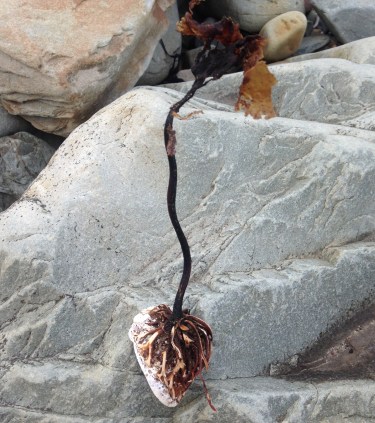
holdfast heart

Last night an anonymous man sent me a message comprised solely of hateful, demeaning comments about my body. The message came about, it seems, because he recognized me from my presence in my local Pride parade and wanted to wound me. I believe, though I am not certain, that it is someone who made a pass at me once and whom I turned down. The comments were designed to make me feel insecure and small. And I will not lie: they had this effect. The comments haunted my sleep and they have haunted my day today, not only because of what they said but because of the reality that someone I don’t even know would reach out to me with such cruelty and hatred.

But I think this sort of experience is all too common. It is the reality of being a woman with any kind of presence on the internet. No, let me amend that: it is the reality of being a woman with any kind of presence in the world. People (usually straight cis men, but not always) feel entitled to map, assess, characterize, and legitimize women’s bodies.

I am writing this because I want to own this experience and transform it. I will not let a stranger take my joy away from me. My presence in the Pride parade this year meant the world to me. I danced through the whole parade. Joyfully, blissfully. I danced because I was surrounded by people who mean a lot to me and because am in a place in my life where I am genuinely happy. I have a job that I adore, I write songs that fill my mind with beautiful electricity when I play them, I love the people in my life, and I love my presence in the world. All of the things are possible because of my body. My body is my voice, my movement, my heart, my hands, my bliss, all I am, and all I create.

I am 34 years old. It is probably only in the last couple of years that I have come to love my body. In my younger years, I struggled with, and overcame, an eating disorder. I internalized the message that my body would only be ‘right’ if I changed it in some way, reshaped it, cut away at its contours. I believe that I would have the right my place in the world only if I occupied less space in the world. And so I reshaped my body. I participated in a long, soft process of self-diminishment, of slowly disappearing like a shadow that slips under the door as the day moves on its axis.

But I am done with disappearing. I love my strong leg muscles, the curves of my stomach, and the feeling of the wind in my hair when I am dancing. I may never be completely free from the inner voices that tell me that I am not good enough, but I am finished with disappearing. I will dance in every parade that means something to me. I will occupy space, I will create, I will make change. I will not be silenced: neither my voice nor my footfalls as I move through the world with joy and presence. I am a formidable human being.

And to all the women (or people of any gender) who have been made to feel like your bodies are not good enough, who have been subject to cruel words and glances that cut you to pieces, I want to say this: I send you all my warm thoughts and love in solidarity that, if you wish, you can wrap around yourself and hold for a while. Come dancing with me, if you want to. In the streets, by the ocean, in songs sometimes, and sometimes in silence. We can undisappear, we can be whole, we can be undiminished.

No.

Image result for crow shadows

Ever since I was a small child, I have had the tendency to put the needs of others before my own. It has often been a struggle for me to say ‘no’ even when I want to. I spent much of today in a contemplation which slowly evolved into a vow. This vow is to nurture and strengthen my ‘no.’ To hold it tightly until it knows it is safe to reach out into the world.

‘No’ is a small bird that I hold in my hand. When released, it flies back to me, bringing sustenance. ‘No’ is the edges of the ocean that encircle my beautiful space of solitude. ‘No’ is the coils of the muscles of the braids in my hair. ‘No’ is a hidden strength that, if ever unraveled, may be woven again.

‘No’ is the crow with wings like torn black construction paper that hovers above me when I run along the waterfront. Despite the force of the wind and the way its body pauses tensely in the air, it is not pushed to the ground.

‘No’ is the quivering light on the forest path. ‘No’ is with me at some of the moments when I feel most free. And so I am learning to love my ‘no,’ to nurture it, and recognize its subtle warmth.

On Bisexuality, Three Fears, and, Ultimately, Love

realistic_heart

One of the realities that I deal with as a bisexual person (yes, I said that word, because silence is good for sleep and stargazing but not so much for changing minds) is that I live with three particular fears. These three fears come alive most vividly when I am dating someone new. They wind around me, bind me tightly, and ask me to choose one of two directions. Fears do not beseech with gentle words; sometimes they speak without words at all, or they shout loudly in the most hidden places, but they always seem to convey their meaning.

One of these fears is that, if I am dating a man, friends from my queer community will reject me (as sometimes has happened in one way or another) for not being or acting queer enough.

Another fear is that, if I am dating a woman, other folks in my life will see it as an experimental whim (as has happened, even from those who are dear to me). Being bi is so often assumed to be just a phase. This is hurtful because to me it is a vital element of my identity.

I am someone who is capable of being romantically and sexually drawn to people of more than one gender. I’ve known this since I was 14-ish, though for many years I seldom spoke of it. I have spoken about it lot more frequently of late. I’ve written about it too, and probably will so more – partly because a dear friend (someone whom I love ferociously and devotedly) recently referred to me as a ‘bisexual activist.’ Coming from this person, these words made me infinitely proud and made me want to shake up the world with words and dancing.

If I am going through a phase, realistically it’s a twenty-year-long phase because I’ll be 34 in less than two weeks. Happy birthday, me, let’s have a party and eat some delicious cake! But oh goodness, that brings me to another assumption: the assumption that as a bi person I want to have my cake and also eat another cake too. That, if I really like more than one gender, then I will never be satisfied. And there it is – there’s the third fear that nestles itself gently between the other aforementioned two.

This third fear is that the person I fall for will believe that someone like me can never love one person fully and completely. That this person will be wary of me because of that notion that bi folks can’t settle down and be satisfied with one love. I can’t speak for everyone, but I for one just want one that person to write songs about forever (as realistic or unrealistic as that hopeless and yet hopeful romanticism of mine may be).

Some people who read this will think to themselves, why can’t she just be more confident? Why focus on fear? Let the fears fall away. Don’t give them your breath, and they will just die naturally on their own.

But the thing is, I am confident. This post was born of fears, but just as much it was born from love. It is about whom I choose to love, but it also comes from a very deep place of self-love. Despite the fears and stereotypes that have haunted me, I am proud of who I am.

And I’ve come to realize that the problem is not that I have these fears. It is that I have good reason to have these fears. I have twenty years’ worth of interactions with friends, lovers, family members, and strangers to confirm to me that these fears are neither irrational nor benign. The problem is not me, but the biphobic stereotypes and myths that still thrive. These stereotypes and myths are often silent but they are still brazen. And their brazen silence is the reason I feel that I need to speak – because people like me have sometimes chosen a long, intricately woven hush rather than bare our authentic selves. Because fear has told us that love and acceptance cannot exist for us without compromise and erasure. This is not a reality I want to endorse; I’m rather fond of love.

I don’t claim to speak for all bi folks. Everybody’s lived experiences are their own. I only have one voice and one heart, but I am at the point in my life where I find value in using both of these instruments unyieldingly. Love is worth the risk. It always is.

Transphobia and the Bathroom Question

Transphobia and the Bathroom Question:
Or, What’s Really Lurking in Your Public Washroom

transally
I am writing this piece because lately a few self-identified progressive folks I know have brought up the bathroom question with me. I suppose it is because I’m doing a project at work with a strong LGBTQ-inclusivity component. This project makes me really, really happy. It fills my heart. And so I talk about these issues a lot when I’m out with friends.

The notorious bathroom question, if you don’t know of it, asks whether trans folks should get to use the bathroom that fits their gender identity. In other words, should a trans man be entitled to use the men’s washroom? And should a trans woman be entitled to use the women’s washroom?

The answer I always want to give is this:

“Who are we to question someone’s gender? They’ve undoubtedly spent years thinking about it, feeling it, and, regardless of to what extent they’ve felt comfortable expressing it, living it as well. And so they probably know a hell of a lot more about it than we do.”

But I don’t say these words. Because honestly, I am still consistently surprised when the bathroom question comes up among my peer group. It shocks me, and this shock silences me. And, much as I love all-encompassing moments of silence, these are not the silences I want to curl up inside.

I want to note that I’m writing this piece from a position of privilege. I’m a cisgender woman. What this means, if you’re not familiar with the language, is that the sex I was assigned at birth matches the gender with which I identify. In addition to being a cisgender woman, I’m also quite feminine-presenting. And so I’ve never had anyone question my choice of bathroom. I’ve never been threatened with hateful words or subject to violence because someone in a public washroom is uncomfortable with my gender expression. But this violence and these threats happen.

The bathroom question is often brought up by opponents of trans rights who claim that allowing trans women to use women’s washrooms would create danger for cisgender women. One example of the many iterations of this logic was in 2012 when Calgary Member of Parliament Rob Anders adamantly opposed Bill C279, a private member’s bill which would add gender identity and gender expression as protected grounds in the Canadian Human Rights Act and hate crime section of the Canadian Criminal Code. Anders described the bill as the “bathroom bill” and suggested that its purpose was to give trans women (whom he purposely misgendered as men) access to women’s washrooms.

I am quite familiar with the bathroom question as raised by people like Anders. In reality, in such a context it tends to be posited as more of a statement or as a moral truth rather than as a question.

But of late, the bathroom question has been expressed to me by friends over casual coffee through this sort of sentiment: “I don’t mind trans women. In fact, I support their right to express themselves and dress as they like. But I wouldn’t want one in a bathroom with me.” Or, “Trans rights are great, but won’t this mean that a man could sneak into the ladies’ room?”

To which I want to reply:

Seriously, my friend? That logic has all of the beauty, strength, and resilience of that wad of toilet paper that got stuck to the heel of my shoe when I was out on a date that time. Please. Let’s step back and think this one over. If a creepy man really gets his kicks from creeping on women doing their private ladybusiness and is willing to dress himself as a woman just to sneak into the ladies’ loo to do so, one has to wonder about his sense of efficiency because he really hasn’t done a good cost-benefit analysis. There are far simpler, much less involved ways to be creepy to women, such as yelling at them from the comfort of one’s truck window. And there will always be conveniently placed dark alleyways and the shadowed corners in bars for him to make use of. Letting trans women use women’s restrooms is not going to suddenly unleash a deluge of creepers being creepers. They already do this quite well and in locations better suited to their convenience.

So instead let’s do a cost-benefit analysis of our own. If there really are men out there who are willing to go to the lengths of misrepresenting themselves and dressing in drag just to sneak into bathrooms and be menacing to women, is this vague possibility worth the cost of discarding the basic right of trans people to go out in public and feel safe when they need to pee?

Are we as a culture really going to let the spectre of a hypothetical boogeyman guide us? Are we really going to let it justify our fear of and cruelty toward a group of people who have been overwhelmingly marginalized, debased, degraded, and even murdered just for being who they are? Have you seen the stats about murder and suicide rates in the trans community? There are some here and here.

I will never understand why we as feminists, as progressives, and as supposed allies, would ever present the bathroom question as if it has any answer other than this answer:

“You know. You, whoever you are, you know your gender. You know, or maybe you are discovering it as you go, which is great too. But you – YOU – know who you are better than I do. So please use the bathroom that makes you comfortable and that best suits your needs. And I, for my part, will do whatever I should do to make that space comfortable for you. By which I mean this: I will not perpetuate transphobia. By which I mean, I will not ogle you while you’re just trying to do your business, I will not objectify you by judging your body, I will not inappropriately ponder the body parts you have under your clothes, I will not yell at you or say hurtful words, I will not act in such a way so as to make you feel small and vulnerable. In other words, I will not be that predator that we as a culture say we are so afraid of.”

Because maybe, just maybe, that predator has been living among us all along – we who are so averse to compassion, we who are so afraid of the Other, we who are so afraid of disrupting the status quo that, through both our actions and inaction, we participate in the suffering of other human beings.

Transphobia is the real predator that we should fear and that we should want out of our public restrooms. But let me tell you, it’s a serious goddamn lurker. Sometimes it hides in the shadows, and sometimes it presents itself in broad daylight. It’s at our windows, in our schools, in our laws, in our statements, in our silence, and also in the stall next to us. It’s in our minds and in our hearts. It’s in my heart. Because we are all immersed in a sea of transphobic tropes and assumptions that do not loosen their hold easily.

I dislike toilet paper on my shoe when I’m a date. I dislike human suffering even more.

I’ve seen the wounds of transphobia in the eyes of people I love and it makes me ache.

I try to be a good ally, but I have made presumptions that I regret. I have said things I never should have said. And I’ve been quiet at moments when there is so much that needs to be said.

So, this is my vow that I will speak up from now on in those moments of shocked silence when someone brings up the bathroom question. I promise I will do this. I will speak back to those who want to present transphobia as a safety measure instead of the injustice that it is. I will keeping writing things, making art, and fostering kindness in my own way. I will keep my heart and mind open, because I still have so much to learn from the world. And, because there is so much to learn, I will never stop asking questions.

But not that question. That one about the bathroom. I’m going to do my part to flush that one out to sea.


I’ve written about transphobia before in the context of Canadian law and prison policy. You can read my article “Stories of 0s: Transgender Women, Monstrous Bodies, and the Canadian Prison System” here.

Heart of a Soldier

And now the latest installment of my silly romance novel rewrites, in which I rewrite the plot synopsis of romance novels based solely on the cover image and title. Older ones are here and here. As always, I find these books at the local grocery store. This one is called “Heart of a Soldier.” Here we go:

IMG_5076_2

Mister Hoofytoes, with his white mane like beautifully frayed kleenex forgotten in pockets of sweaters run through the dryer, was not your average horse. With his subtle smile and a perfectly coiffed goatee too sultry to show on a book cover, Mister Hoofytoes rivaled Ryan Gosling with his delicately masculine allure.

Like Ryan Gosling, Mister Hoofytoes looked incredibly gorgeous and yet somehow approachable while wearing tan sweater-vests. Like Ryan Gosling, Mister Hoofytoes was a passable cellist.

And, also like Ryan Gosling, Mister Hoofytoes was one of two characters in an epic tale of romance that would be remembered throughout the ages. (Alas, unlike Ryan Gosling, Mr. Hoofytoes would never win four Teen Choice Awards, because the world is cruel).

The lady love in Mister Hoofytoes’ epic romance was Catherine.

Catherine was a 26-year old farmgirl with a penchant for lilac blouses that looked awkward when paired with the cowboy boots of which she was so fond. Catherine had named Mister Hoofytoes when she was six years old, and had loved him ever since.

Catherine would ride atop Mister Hoofytoes every morning. She knew Mister Hoofytoes’ shoe size. She knew he liked his oats scattered like bits of fairydust. She knew the way he loved to stand behind appropriately placed men so as to majestically appear as if he only had one back leg.

But Catherine did not know Mister Hoofytoes’ secret.

Mister Hoofytoes had the heart of a soldier. Quite literally. One summer morning, while galloping through a dew-glazed meadow, Mister Hoofytoes jumped over an enticingly high cluster of parsley, sage, and rosemary. While midair, Mister Hoofytoes fell into a temporal rift and wound up in the distant future in a war-torn earth ravaged by hellhounds and hazardous cybernetic spider overlords.

Trapped in this futuristic land for ten years, Mister Hoofytoes befriended the enigmatic ukulele-playing Gordon, who was a soldier in the resistance. Gordon taught Mister Hoofytoes how to fly a fighter plane powered by cold fusion and dreams. Gordon taught Mister Hoofytoes how to fool hovergrenades using light refracted from well posed, steely cheekbones. And, knowing how Mister Hoofytoes pined for Catherine and the charming way she scattered oats, Gordon taught Mister Hoofytoes the importance of not giving up on love.

When Gordon was shot down by a passing arachno-tank, he bestowed upon Mr. Hoofytoes a gift that would make him remember these lessons forever – his bionic heart, the heart of a soldier. After Gordon took his final breath, cybercardiologists transplanted the heart into Mister Hoofytoes’ chest, thus giving him both human emotions and the ability to travel through time using temporal cyberfusion and wishes.

When Mister Hoofytoes returned to his longed-for farm, he saw Catherine there, her hair blowing in the wind with the fervour of burlap. A sub-par human man stood beside her wearing an unsettlingly plain white t-shirt. In that instant, Mister Hoofytoes vowed he would woo Catherine away to be his own, as both fate and Gordon had decreed.

The next time Catherine sat atop Hoofytoes, her legs awkwardly held to one side, surely she would begin to sense the loud mechanical whirr of true love. Even though he could not speak to her, surely with time she would realize that Mister Hoofytoes’ chest was bursting with deep emotion – and with the heavily distended, cybertronic heart of a soldier.

Rust

Rust

You fade like red in the light of the morning
You become the colour of rust
You begin to match the truck in the yard
abandoned and free to do its own bidding

You gave me your name and your business card
You wanted a life that was full of beginnings
You wanted a sky that was empty of warnings
You wanted a heart made harder by lust

You asked me to take your name and your pain
And baptismal waters made sacred by sinning:
Your ocean was placid, you needed my thrust,
You wanted the red of a sailor’s morning

You wandered between our bed and the cold waves
You asked me if I would continue adorning
your neck with fine beads like the night of our wedding,
the sweat that unwinds between mountains of dust

You gave me your ride and I gave you my trust
I opened my heart wide instead of spreading
My legs were held tightly against my chest, my hands
Were gripping your wrists and your lists of demands

Winter

Winter

I stood under the shadows of the frost-lined lilac tree
its branches lifted to the sky by the thrust
of the fists of brittle flowers not yet broken apart by the cold
I hid under laughter
not wanting to ask:
are you too young for me
too sure of what you want

I wore a red dress that is too tight
But it keeps my heart from falling out
and making a mess all over your shoes

After we talk inside for a while,
you yawn to tell me I should go home
I catch this
like a fishhook through skin
intention that blooms into accident

You used to drive me across the city
And now every red car that passes
reminds me
of the way your dark hair looked
when you rested your head on my lap
and turned your voice away

I don’t want to hear about how you used to bring
women flowers
I don’t want to know this
I imagine you always chose the red ones. We like these best
They remind us that we’re not pregnant, and so
there’s nothing to fear

that we are still young
and in between the rifts of our bodies
there is still time
to live as if there is no need for sleep

My dreams have become ingrown
like fingernails
I never cut them
I sense your eyes aren’t used to candlelight
and so you see by touch
you read the thoughts
that I hide just beneath my skin

you know the braille of goosebumps
like the princess knew a single pea
under a stack of 20 mattresses:
these are the things that mean
sleeplessness

When you left, I held onto all your childhood fears
that you once told to me between shards of broken glass
and I kept the shadows you left on my body
They spread like water over linen

When you used to sleep beside me
I would look out the window every morning
at the birds
the northern cardinals
points of blood against
the silence of the white sky